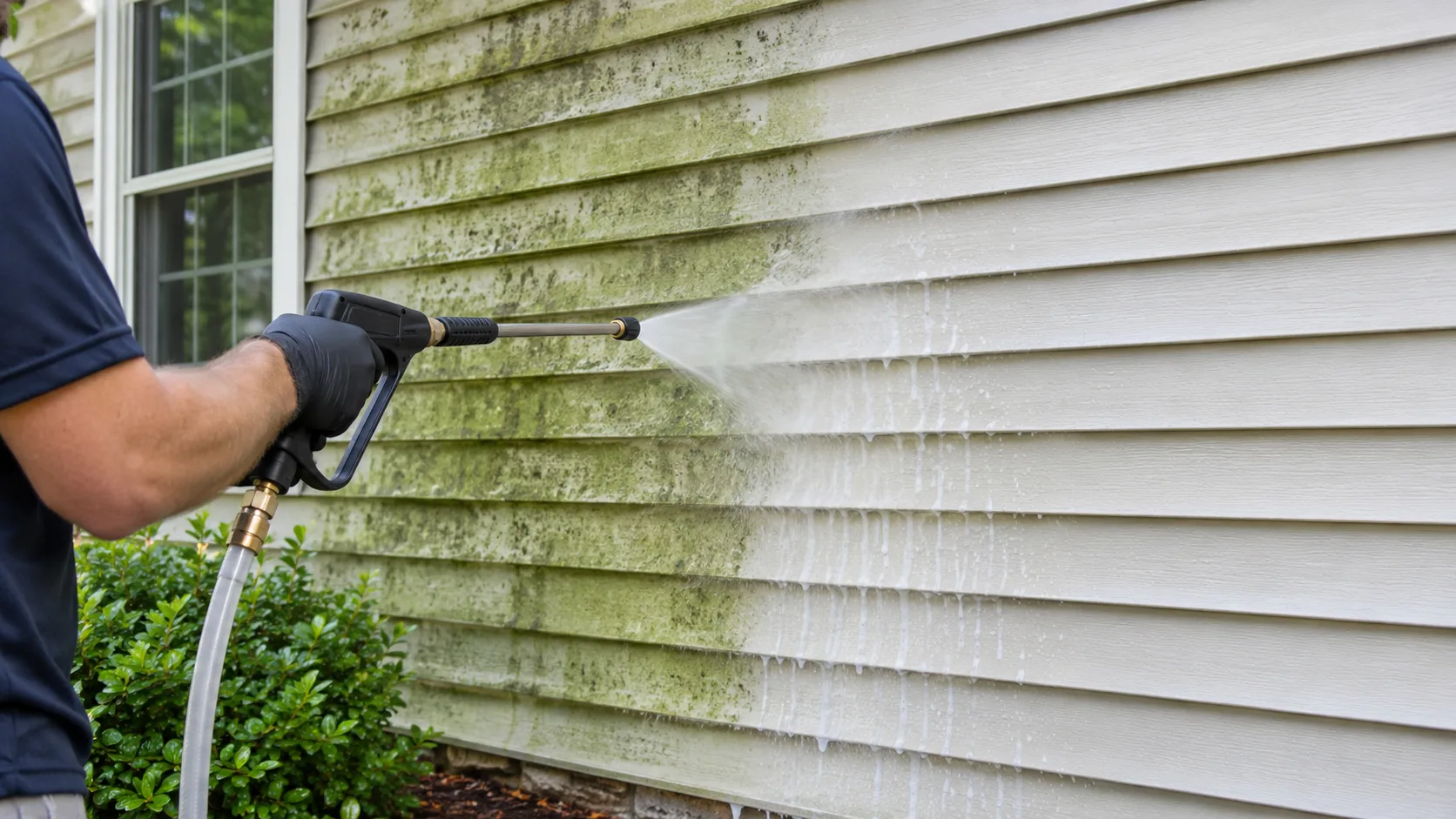
Why Do Missouri Homes Get Mold, Mildew and Algae on Siding?
Missouri's climate gives organic growth exactly what it needs: moisture, warmth, and shade. Statewide precipitation averages about 41 inches a year, ranging from roughly 35 inches in the northwest to 55 inches in the southeast, according to NOAA's state climate summary, and summer humidity has trended upward since the mid-20th century. The EPA notes that mold spores are present nearly everywhere outdoors and that none will grow without moisture, so siding that stays damp becomes a host. That is why green and black growth often shows up first on shaded north-facing walls, under trees, behind shrubs, and beneath overflowing gutters. Warm nights add to it. At St. Louis Lambert, nights of 75 degrees or warmer rose from 13 per year in 1961 to 1990 to 20 per year in 1991 to 2020. Longer warm, damp stretches give algae and mildew more time to spread.
What Is the Difference Between Mold, Mildew and Algae on Siding?
They look similar from the street but behave a little differently. Green algae usually appears as a powdery green film on shaded walls and is one of the most common growths homeowners notice. Mildew is a surface fungus that shows up as gray, white, or black specks, often on trim, soffits, and siding under eaves. Mold is a broader group of fungi that can look black, green, or fuzzy and tends to grow where moisture lingers, such as behind downspouts or near sprinklers. All three feed on dirt, pollen, and organic debris on the surface, and all three return if the moisture source is not addressed. The EPA also stresses that killing mold is not enough, because dead mold still has to be physically removed. Common signs to look for include:
• Green film on north-facing or shaded walls
• Black or gray specks on trim and soffits
• Dark streaks below gutters and downspouts
• Growth near sprinklers, shrubs, and trees
• A musty odor near damp exterior corners
Can You Pressure Wash Mold Off Vinyl Siding?
You can, but it is risky, and many manufacturers advise caution. Vinyl siding care guidance from the Polymeric Exterior Products Association, the industry group behind the Vinyl Siding Institute program, says a pressure washer should be used only with caution and according to both the siding and washer instructions, that some siding manufacturers do not recommend power washing at all, and that the stream should never be aimed upward, because it can force water behind the panels. Trapped water can feed growth inside walls. Brick needs care too. The Brick Industry Association's Technical Note 20 advises not exceeding 400 PSI at the nozzle unless the brick manufacturer permits it and calls pressures above 800 PSI inappropriate for brick. High pressure can also strip surface growth without treating it, so it may return quickly. Compare both methods in our guide to pressure washing vs soft washing in Missouri.
How Do You Safely Remove Algae From Siding Yourself?
For small areas, a careful DIY approach works. Start by wetting nearby plants and covering brick or stone accents so runoff does not stain them. For mildew on larger areas of vinyl, industry guidance suggests a solution of 30 percent vinegar and 70 percent water, applied with a soft cloth or a long-handled, soft-bristle brush. Work from the bottom of the wall up to prevent streaking, and rinse the solution completely before it dries. Avoid undiluted chlorine bleach, organic solvents, and grease removers, and never mix bleach with ammonia-based cleaners, which the EPA warns can produce toxic fumes. Test any cleaner on a hidden spot first. The EPA's general mold guidance says areas under about 10 square feet can usually be handled yourself, while larger problems call for a professional. Basic DIY steps include:
• Wet plants and cover masonry accents
• Mix 30 percent vinegar with 70 percent water
• Scrub gently with a soft-bristle brush
• Work bottom to top and rinse before it dries
• Call a professional for large or high areas
What Is Soft Washing, and Why Is It Best for Missouri Siding?
Soft washing uses low-pressure water, typically under 500 PSI, combined with a cleaning solution that loosens and breaks down organic growth rather than blasting it off. Andy's Window Cleaning uses low-pressure soft washing for house washing on vinyl siding, brick, stucco, and painted surfaces, which protects the finish, seals, and window frames while removing green algae, mildew, and dirt. Because the solution works on the growth itself, results usually last longer than a plain high-pressure rinse. Soft washing also reaches second-story siding, soffits, and eaves from the ground, so there is no need to lean ladders against gutters. It pairs naturally with roof cleaning for black streaks on shingles and with window cleaning in the same visit. Bundling exterior services in one visit, for one combined price, is the simplest way to clean the whole house before humid Missouri summers set in.
How Much Does Professional House Washing Cost in Missouri?
Andy's Window Cleaning does not publish set prices for house washing and gives a free fixed quote after looking at your home, but national market data offers a useful starting point. HomeAdvisor's 2025 cost guide reports that soft washing most homes runs $250 to $1,000, with one-story homes generally on the lower end and taller homes higher. Angi's 2024 data puts soft washing at about $0.30 to $0.60 per square foot. These are typical market ranges, not Andy's prices. Several factors move the number, including square footage, story height, siding material, how heavy the growth is, and how close plants and outdoor living areas sit to the walls. Homes with heavy growth on shaded walls may need extra dwell time or a second application. Booking house washing together with window cleaning or gutter cleaning in one visit is usually the most cost-effective option.
How Can Andy's Window Cleaning Help With Siding Mold and Algae Removal in Missouri?
Andy's Window Cleaning provides soft wash house washing that removes mold, mildew, and algae from vinyl, brick, stucco, and painted siding across the St. Louis metro and St. Charles County, including Kirkwood, Webster Groves, Ladue, Chesterfield, Ballwin, Florissant, St. Charles, St. Peters, O'Fallon, and Wentzville. Learn more about our local crews on the window cleaning in St. Louis page. Our insured, uniformed, background-checked crews can bundle house washing with window cleaning, roof cleaning, and gutter cleaning in one visit for one combined price. Clearing gutters during the same visit also removes a common moisture source that feeds growth on siding. Every job carries our guarantee: "Done Right, or We Make It Right!" Hours are Monday through Friday 8am to 7pm and weekends 9am to 5pm. Call 314-494-4444, seven days a week, or request your free quote online.
Frequently Asked Questions About Removing Mold and Algae From Siding
Diluted solutions can, but undiluted chlorine bleach is on the list of products siding industry guidance says to avoid, and the EPA does not recommend biocides like bleach as a routine mold cleanup step. Dead mold still has to be removed, and bleach can harm plants and some finishes. A professional soft wash uses a balanced solution and controlled rinsing instead.
Most Missouri homes benefit from a house wash once a year, usually in spring or early summer, to clear pollen, dirt, and algae. Homes with heavy shade, nearby trees, or past growth problems may need cleaning more often. Annual washing keeps growth from building up, protects the finish, and makes each cleaning faster and easier.
Not when it is done carefully. Professional crews pre-wet plants and landscaping, control runoff, and rinse thoroughly after cleaning so the solution does not sit on foliage. Covering delicate shrubs near the walls adds protection. Let your crew know about vegetable gardens, ponds, or prized plantings before work starts so they can plan around them.
North-facing and shaded walls stay damp longer because they get less direct sun, and moisture is what algae and mold need to grow. Trees, shrubs touching the siding, and overflowing gutters make it worse. Trimming plants back, keeping gutters clear, and washing the siding once a year all help slow regrowth on those walls.
Exterior growth is mostly a cosmetic and maintenance problem, but it can stain siding and hold moisture against the surface. The EPA notes that mold can cause allergic reactions in some people, so wear gloves and eye protection if you clean it yourself. If you suspect moisture or mold inside walls, contact a qualified remediation professional.
Yes. Soft washing suits brick, stucco, and painted surfaces because it uses low pressure. The Brick Industry Association advises staying at or below 400 PSI at the nozzle on brick unless the manufacturer permits more. Stucco is porous and can be damaged by aggressive spraying, so a gentle wash and careful rinse give the safest results.