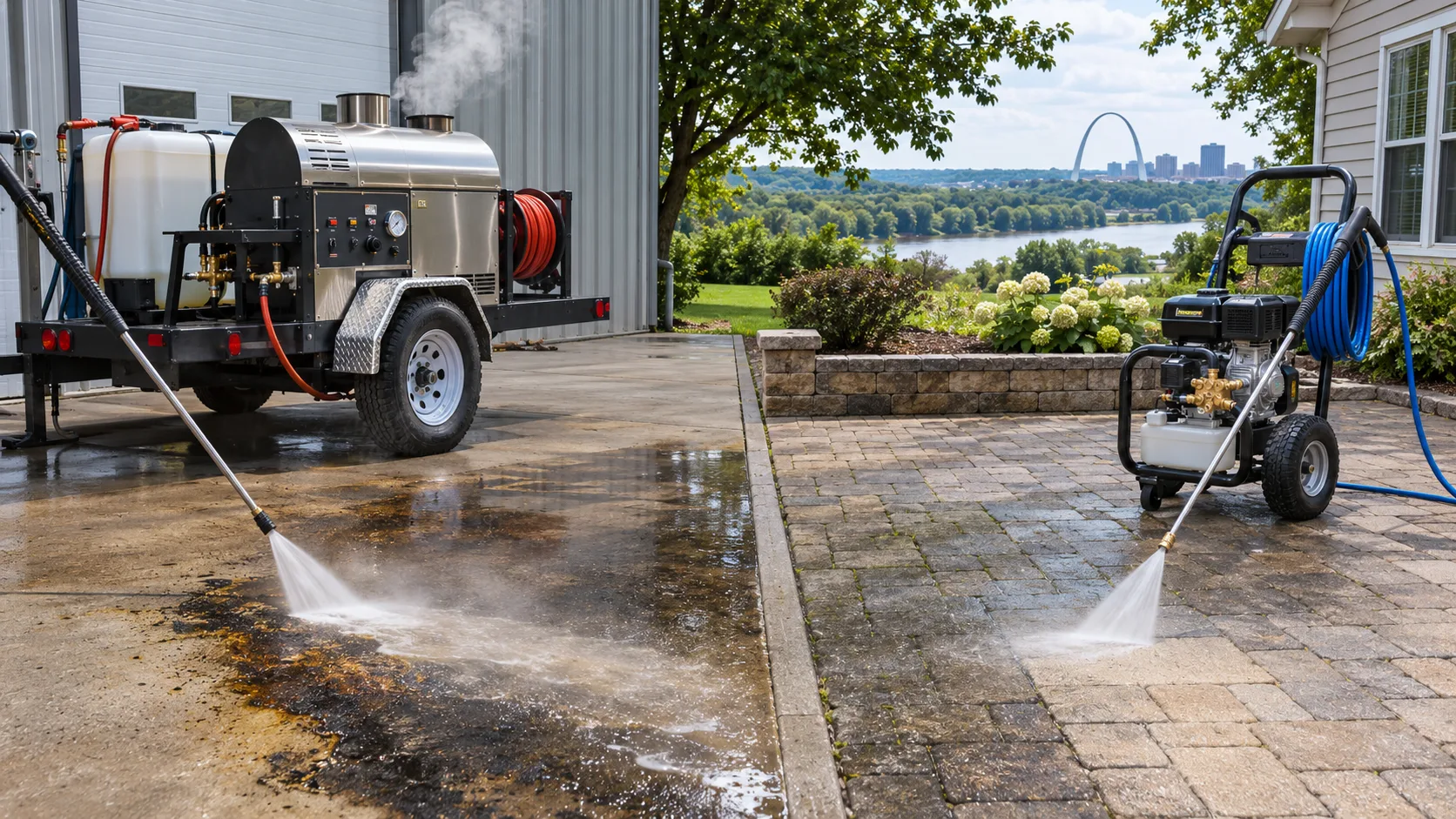
What Is the Difference Between Power Washing and Pressure Washing?
The main technical difference is heat. Both methods spray water at high pressure, but a power washer heats the water, while a pressure washer uses cold or room-temperature water. Angi and HomeAdvisor both describe the difference this way, and Lowe's notes that hot water units can heat water up to about 250 degrees. Heat helps break down grease, oil, and gum, which is why power washing is popular for commercial concrete, drive-throughs, and parking areas. Pressure washing is simpler, cheaper to run, and suitable for more surfaces, so it handles most routine residential cleaning. In everyday conversation, many people and even many contractors use the two terms interchangeably, so it is worth asking any company you hire whether it uses hot water, cold water, or low-pressure soft washing for each surface on your property before work begins.
Which Surfaces Need Power Washing vs Pressure Washing?
Match the method to the surface, not to the strongest machine available. Hot water power washing is best for hard, durable surfaces with grease or oil, such as garage floors, commercial sidewalks, dumpster pads, and restaurant drive-throughs. Cold water pressure washing works well on concrete driveways, sidewalks, patios, pool decks, and some fences. Angi recommends roughly 3,000 to 4,000 PSI for concrete hardscaping and no more than about 1,500 PSI for wood and aluminum siding. Delicate surfaces need neither method. Vinyl siding, stucco, painted wood, and asphalt shingle roofs are better served by soft washing, which uses low pressure and a cleaning solution. Windows and light fixtures should never be blasted at all, because high pressure can break seals and force water inside. A quick surface guide:
• Power washing with hot water for grease, oil, and gum on concrete
• Pressure washing with cold water for driveways, sidewalks, and patios
• Soft washing for vinyl, stucco, and painted siding
• Soft washing for asphalt shingle roofs
• Pure water cleaning for windows and glass
Can Power Washing Damage Siding, Brick or Decks?
Yes. Too much pressure or heat on the wrong surface causes damage that costs far more than the cleaning. Angi warns that the heat from a power washer can damage wood siding or decking, and that high pressure should stay away from asphalt shingles, stained wood, and lead paint. Vinyl siding industry guidance cautions against aiming the stream upward, because water can be forced behind the panels, and notes that some siding manufacturers do not recommend power washing at all. The Brick Industry Association's Technical Note 20 advises keeping pressure at or below 400 PSI at the nozzle on brick unless the manufacturer permits more, with the nozzle at least 12 inches from the surface. Etched concrete, stripped paint, and fuzzed wood fibers are common results of using the wrong method. Learn more in our guide to whether pressure washing can damage siding, brick, or concrete.
Is Power Washing or Pressure Washing Better for Missouri Homes?
For most Missouri homes, cold water pressure washing for concrete and soft washing for siding cover nearly every need. Missouri averages about 41 inches of precipitation a year, according to NOAA's state climate summary, and damp, humid stretches encourage green algae and mildew on siding, decks, and shaded concrete. Those organic stains respond better to a cleaning solution and gentle rinse than to heat and force. Hot water power washing earns its place on oil-stained garage floors, driveways with vehicle drips, and commercial properties with grease from kitchens or drive-throughs. Spring pollen and fall leaf stains on patios and walkways usually lift with cold water pressure washing alone. Andy's Window Cleaning uses pressure washing for driveways, sidewalks, patios, and decks, and low-pressure soft washing for siding and roofs. Choosing the gentlest method that works protects your surfaces and keeps costs down.
How Much Does Power Washing vs Pressure Washing Cost in Missouri?
Power washing usually costs more because hot water equipment is more expensive to buy, fuel, and maintain. Angi reports that professional pressure washing starts around $100, while power washing starts around $250. HomeAdvisor's 2025 guide puts average pressure washing at about $310, with most jobs between $212 and $448, and typical pricing of $0.10 to $0.50 per square foot. These are typical national market ranges, not Andy's prices. Andy's Window Cleaning provides a free fixed quote based on your actual surfaces, square footage, and stains, and bundling pressure washing with window cleaning, house washing, or gutter cleaning in one visit gives you one combined price for the whole exterior. You can see every option on our exterior cleaning services page. Typical market ranges include:
• Pressure washing average of about $310 (HomeAdvisor, 2025)
• Pressure washing at $0.10 to $0.50 per square foot
• Driveway cleaning at about $100 to $250
• Soft washing most homes at $250 to $1,000
• Professional power washing starting near $250 (Angi)
Should You Rent a Pressure Washer or Hire a Professional?
Renting makes sense for small, flat concrete jobs if you are comfortable with the equipment. Angi lists DIY pressure washer rentals at about $35 to $175 per day. The risks come from technique. A narrow nozzle held too close can etch concrete, strip paint, and splinter wood, and spraying upward on siding can push water behind panels. Hot water units add burn risk and call for extra caution, according to Lowe's. Professionals bring the right nozzle, pressure, and temperature for each surface, along with soft wash equipment for siding and roofs. They also carry insurance in case something is damaged. For two-story siding, roofs, or anything near windows, hiring a pro is usually the safer choice. Andy's Window Cleaning crews are fully insured, uniformed, and background-checked, and they can handle concrete, siding, and glass in a single visit, so you do not need to juggle multiple contractors.
How Can Andy's Window Cleaning Help With Pressure Washing and Power Washing in Missouri?
Andy's Window Cleaning matches the method to the surface, using pressure washing for driveways, sidewalks, patios, and decks, and low-pressure soft washing for siding and roofs, across the St. Louis metro and St. Charles County. We serve Clayton, Kirkwood, Webster Groves, Creve Coeur, Chesterfield, Ballwin, Florissant, St. Charles, St. Peters, and O'Fallon. Visit our window cleaning in St. Louis page to see local coverage. Every quote is free and fixed before work begins, and we are open Monday through Friday 8am to 7pm and weekends 9am to 5pm. Voted Missouri's Best Window Cleaning Company in 2023, 2024, and 2025 by Missouri Best Magazine, we back every job with our guarantee: "Done Right, or We Make It Right!" Call 314-494-4444, seven days a week, or request your free quote and bundle services for one combined price.
Frequently Asked Questions About Power Washing vs Pressure Washing
Not exactly. Both use high-pressure water, but power washing heats the water, while pressure washing uses cold or room-temperature water. Many people use the terms interchangeably, so ask your contractor which equipment they plan to use. For most homes, cold water pressure washing and low-pressure soft washing handle nearly every exterior surface.
Angi recommends roughly 3,000 to 4,000 PSI for concrete hardscaping such as driveways and walkways. Use a wide fan nozzle or a surface cleaner, keep the wand moving, and hold it at a consistent distance to avoid etching or striping. Newer or decorative concrete may need lower pressure, so test a hidden area first.
For most siding, yes. Soft washing uses low pressure, typically under 500 PSI, and a cleaning solution that breaks down algae and mildew, so it cleans without forcing water behind panels or damaging paint. Pressure washing is better for hard surfaces like concrete. Many homes need both methods on the same visit.
Cold water pressure washing can lighten fresh oil stains, but hot water power washing combined with a degreaser is usually more effective on grease and oil, according to Lowe's. Older stains that have soaked deep into the concrete may fade without disappearing completely. Treating drips quickly gives you the best chance of full removal.
Once a year works for most Missouri driveways, often in spring after winter grime, de-icing residue, and pollen build up. Shaded driveways prone to algae, homes under heavy tree cover, and properties with frequent vehicle drips may benefit from twice-yearly cleaning. Sealing concrete after cleaning can help it stay cleaner longer.
No. Angi advises against using power washers or pressure washers on windows, because high pressure can break seals, damage frames, and force water inside. Windows are best cleaned with pure deionized water and a water-fed pole, which leaves glass spot-free with no soap residue and reaches upper floors from the ground.