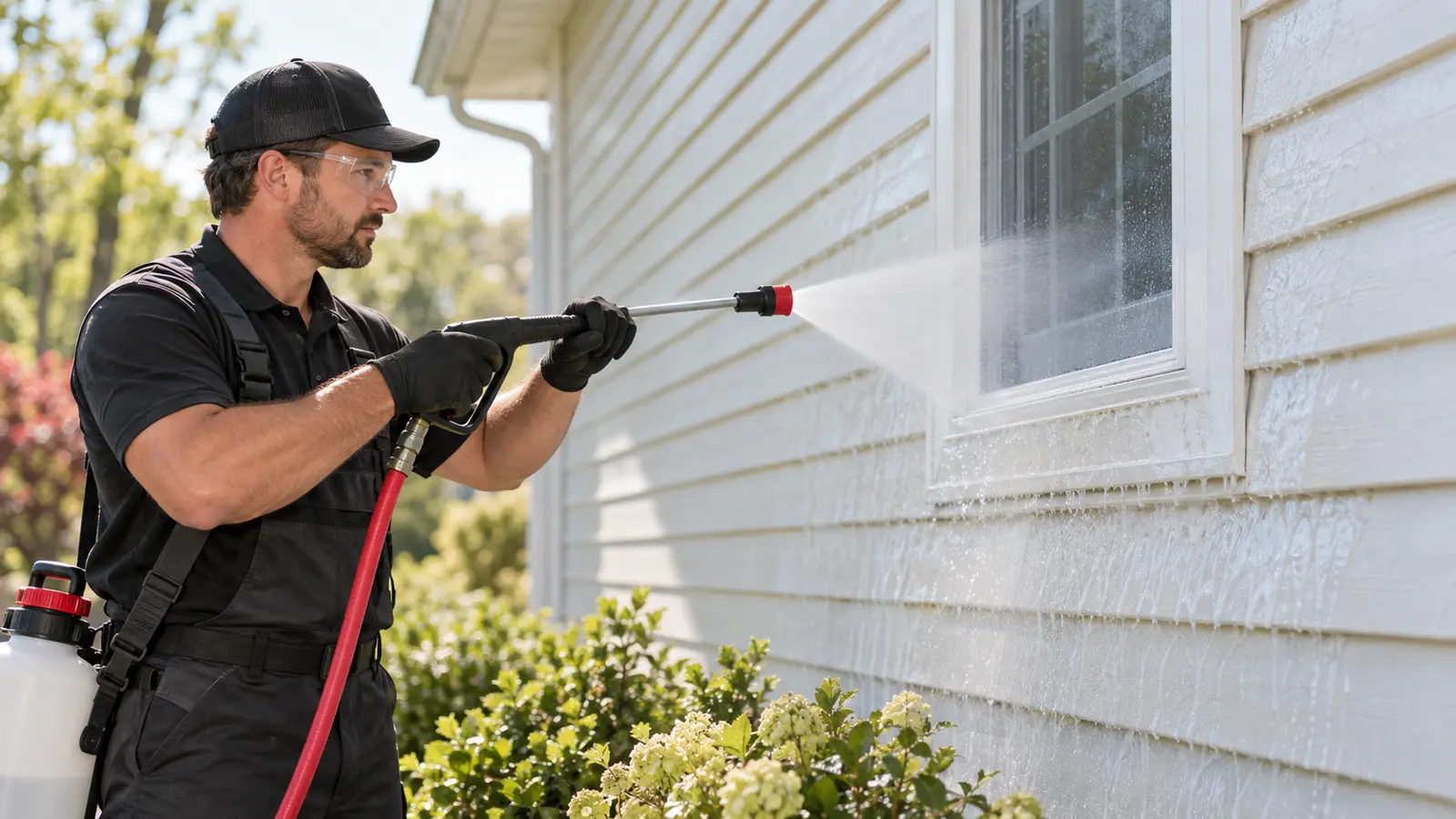
Yes, power washing can damage siding, and it does more often than most homeowners realize. The damage ranges from cracked vinyl panels and stripped caulking to water intrusion inside wall cavities that causes mold, rot, and structural problems over time. Understanding which surfaces can tolerate pressure washing and which cannot helps you protect your home while still getting a thorough exterior clean.
Which Types of Siding Are Most Vulnerable to Power Washing Damage?
Vinyl siding is the most commonly damaged material because it looks durable but does not tolerate high-pressure water directed at its edges or panels. Water forced between panels can saturate the wall cavity behind it. Older wood siding with failing or peeling paint is particularly vulnerable; even moderate pressure strips paint and drives moisture into wood grain that is already compromised. Stucco and EIFS (exterior insulation finishing systems) have relatively soft outer coatings that high-pressure water can crack or gouge. Historic brick with aging mortar is at risk when water is directed forcefully into joints, eroding the mortar that holds the masonry together.
What Happens When Siding Is Power Washed Incorrectly?
The most immediate consequence is cosmetic: cracked panels, stripped paint, and missing caulking around window frames and door trim. The more serious consequence is water intrusion. When high-pressure water forces moisture behind siding, it saturates the building wrap, sheathing, insulation, and framing inside the wall. That moisture creates the conditions for mold growth within 24 to 48 hours in warm weather. The damage is not always visible at first; by the time musty odors or interior staining appear, significant remediation work may already be necessary. These problems are entirely preventable with the correct cleaning method.
What PSI Levels Are Considered Safe for Exterior Siding?
Most professional guidelines place vinyl siding between 1,200 and 1,500 PSI maximum, using a 25-degree or wider fan nozzle held at least 12 to 18 inches from the surface. Wood siding requires lower settings, typically 500 to 800 PSI depending on age and paint condition. Fiber cement, brick, and concrete can tolerate higher pressure, but even these materials require proper nozzle selection and distance. The angle matters as much as the PSI: water directed upward or into panel seams is far more likely to cause intrusion than water applied at a downward angle across the surface.
What Is the Safe Alternative for Cleaning Siding?
Soft washing, also called house washing, is the professional standard for exterior siding and is what Andy's Window Cleaning recommends for vertical wall surfaces. The process applies biodegradable cleaning solution at low pressure. The solution penetrates and breaks down algae, mildew, oxidation, and grime at the surface level before a gentle rinse removes the material. No high-pressure water is directed at the siding, eliminating the risk of water intrusion, panel damage, or caulking removal. Soft washing also addresses biological growth more completely because the cleaning agents neutralize spores, slowing regrowth.
How Do You Know If Your Siding Was Damaged by Power Washing?
Signs of power washing damage include cracked or loose vinyl panels, paint stripped in horizontal bands consistent with spray paths, caulking missing around windows and door frames, and interior symptoms such as musty odors, wall staining, or soft drywall near exterior walls. If you notice these signs after a cleaning, have the siding and wall inspected promptly. Contact Andy's Window Cleaning to schedule safe exterior cleaning in St. Louis County using the right method for every surface on your property.
FREQUENTLY ASKED QUESTIONS
Yes. High-pressure water can crack vinyl panels, dislodge siding from its channels, force water into wall cavities behind the siding, and strip caulking around windows and doors. These problems are more common when a pressure washer is held too close to the surface, the nozzle is too narrow, or the PSI is set too high for the material. Vinyl is more resilient than older wood but less so than concrete, and it should always be cleaned with lower pressure or a soft wash method to avoid the risks that high PSI creates.
Most siding professionals recommend staying between 1,200 and 1,500 PSI for vinyl siding, using a 25-degree or wider nozzle held at least 12 to 18 inches from the surface. Wood siding typically requires even lower pressure, around 500 to 800 PSI, depending on the age and condition of the wood. Fiber cement and brick can tolerate somewhat higher settings. These are general guidelines; the specific condition of each surface affects what pressure is appropriate, which is why professional assessment before washing matters.
Older wood siding with peeling or failing paint should not be power washed because water at any significant pressure will accelerate paint removal and can drive moisture into the wood. Engineered wood products like LP SmartSide are not approved for high-pressure washing by their manufacturer warranties. Historic masonry with aging mortar joints is vulnerable to erosion from direct water pressure. EIFS (synthetic stucco) systems require extremely low pressure because the outer coat is relatively soft and can be damaged by even moderate PSI if applied incorrectly.
Yes. When water is forced behind siding at high pressure, it can saturate the sheathing, insulation, and framing inside the wall cavity. The damage is not always immediately visible, but musty odors, interior wall staining, bubbling paint, and eventually mold growth can all result from water intrusion that started with an improper power washing job. The risk is highest when water is directed upward behind siding panels, when caulking around windows and penetrations has been stripped, or when siding is already compromised by age or impact damage.
House washing, also called soft washing, is the professional alternative for exterior siding. It applies biodegradable cleaning solution at low pressure, allowing the chemistry to break down algae, mildew, pollen, and grime without relying on force. The solution is then rinsed away gently, leaving the siding clean without any of the risks that high-pressure water creates on vertical wall surfaces. Soft washing also addresses the root cause of biological growth more thoroughly because the cleaning agents neutralize spores, slowing the rate at which algae and mildew return.
Common signs of power washing damage to siding include cracked or loose vinyl panels, paint that has been stripped or is peeling in horizontal bands consistent with spray paths, caulking that has been removed around window frames and door trim, and moisture-related problems such as warped drywall, musty odors, or water staining inside the home near exterior walls. If you notice any of these issues after a pressure washing job, have the siding and underlying wall inspected promptly, as water in wall cavities can cause mold growth within 24 to 48 hours in Missouri's warm seasons.
For the exterior walls and siding of your home, soft washing is the safer and more effective choice in St. Louis County. For hard surfaces like driveways, concrete patios, pool decks, and retaining walls, power washing is appropriate and produces excellent results. Many St. Louis homeowners benefit from both services in the same appointment: soft washing the house exterior and power washing the driveway and walkways. A professional technician can assess your surfaces and recommend the right method for each area before any cleaning begins.