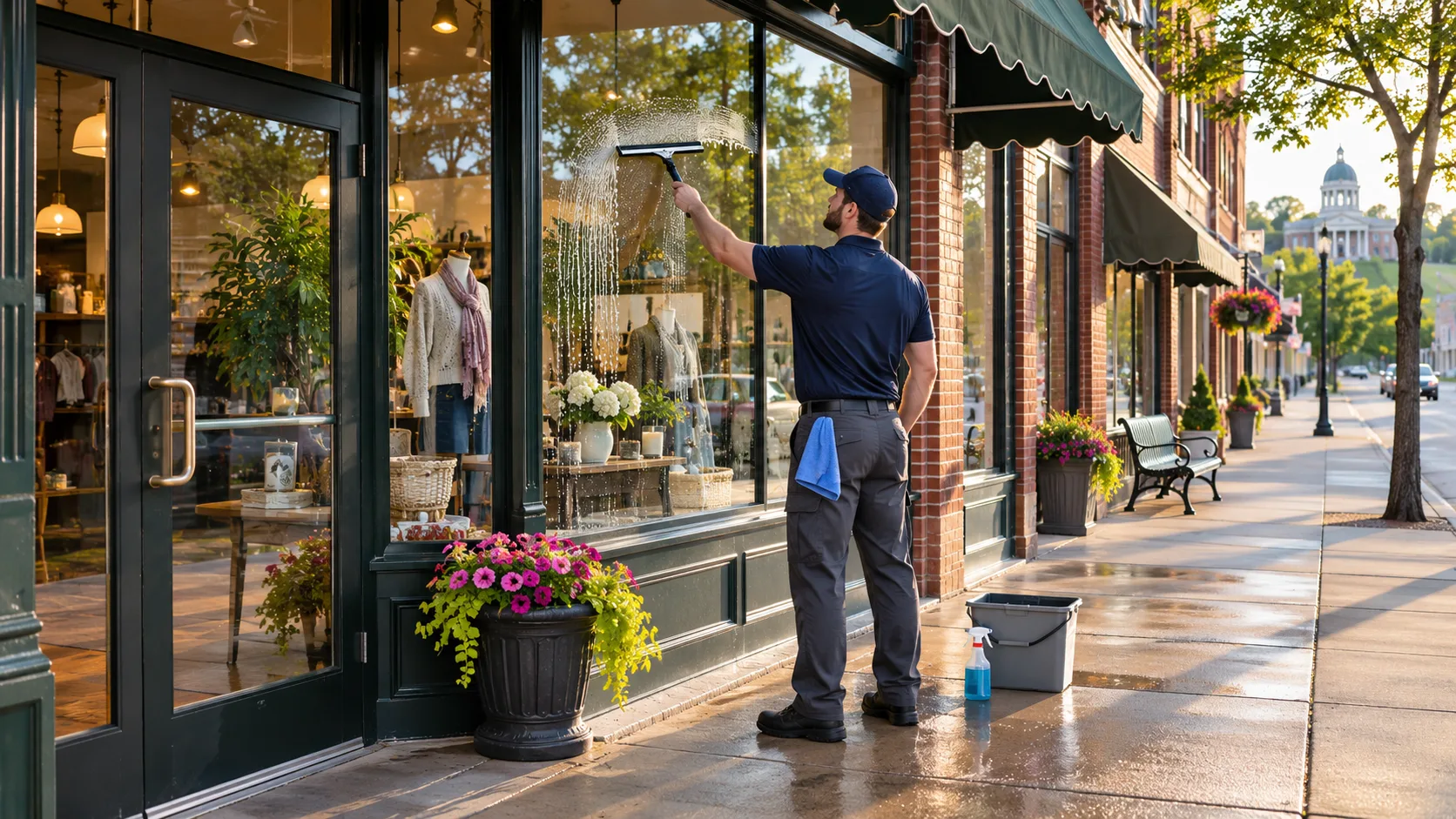
How Often Should Storefront Windows Be Cleaned in Missouri?
Monthly service is the right starting point for most Missouri storefronts. That rhythm keeps fingerprints, dust, and water spots from building into a dull haze that customers notice from the sidewalk. Businesses with heavy foot traffic, food service, or glass that faces a busy road usually move to weekly or bi-weekly visits, because smudges on entry doors and grime near the parking lot return within days. Professional offices, clinics, and businesses set back from traffic can often stretch to quarterly exterior cleaning with spot cleaning of doors in between. The best schedule is the one that matches how fast your glass actually gets dirty, not a number pulled from a calendar. A simple test works well: if you can see streaks, handprints, or spotting from ten feet away in afternoon sun, your current interval is too long. Most owners find their ideal cadence after one season of regular service.
What Factors Change How Often a Storefront Needs Window Cleaning?
Location and traffic matter more than the size of the glass. A small boutique on a busy arterial road can need more frequent service than a large office set back behind landscaping. Road film from passing cars, construction dust, and exhaust settle on exterior glass quickly, while entry doors collect handprints and nose prints from children and pets every day. Irrigation systems are another common cause, because sprinklers that hit the glass leave mineral spots that harden if they sit for weeks. Signage, window graphics, and display lighting also make dirt more visible, so a store that relies on window displays usually needs a shorter cycle. Finally, think about your customers. Restaurants, salons, medical offices, and dealerships are judged on cleanliness, so glass is part of the first impression whether you plan for it or not. These are the factors that most often push a schedule shorter:
• Frontage on a busy road, highway, or parking lot with heavy turnover
• Food service, outdoor seating, or a drive-through window
• Sprinklers or irrigation spray that reaches the glass
• Nearby construction, gravel lots, or unpaved shoulders
• Large display windows, glass doors, or interior lighting that shows every streak
How Do Missouri Seasons Affect Storefront Window Cleaning?
Missouri weather adds seasonal pressure to any cleaning plan. In spring, tree pollen coats glass in a yellow film, and the St. Louis County Pollen and Mold Center notes that oak pollen season alone runs from March to May. Summer brings thunderstorms that splash soil onto lower panes, along with insects drawn to lit display windows at night. Fall adds leaf debris, harvest dust in rural towns, and cobwebs in the corners of frames. Winter is often the hardest season on storefront glass, because road salt and slush spray from passing traffic and leave a white, chalky residue on lower panes and doors. Many Missouri businesses add extra visits in spring and winter, then return to their normal interval in summer and fall. Building that seasonal flexibility into a recurring plan is easier than calling for emergency cleaning every time the weather turns.
Which Storefront Cleaning Schedule Fits Your Type of Business?
Different businesses wear their glass differently, so a single schedule rarely fits every tenant on the same block. A restaurant with a patio and constant door traffic sees greasy handprints and splash marks daily, while a law office with tinted windows may look fine for months. Retail stores that rely on window displays sit in the middle and tend to benefit from monthly or bi-weekly service. The goal is to clean just before dirt becomes visible to customers, which protects your image without paying for visits you do not need. Many owners also split service, with exterior glass on one schedule and entry doors or interior display glass on a shorter one. Commercial window cleaning is typically scheduled before opening or after closing, so service does not interrupt sales. These starting points work well for most Missouri properties:
• Restaurants, cafes, and bars: weekly or bi-weekly
• High-traffic retail and convenience stores: weekly or bi-weekly
• Boutiques, salons, and showrooms: bi-weekly or monthly
• Banks, medical, and dental offices: monthly
• Professional offices and low-traffic buildings: quarterly
How Much Does Storefront Window Cleaning Cost in Missouri?
Andy's Window Cleaning typically prices storefront glass at 40 to 75 dollars per visit on a recurring schedule. Recurring service costs less per visit than a one-time cleaning, because regularly maintained glass cleans faster and the route can be planned in advance. Larger commercial buildings are priced by pane count, glass square footage, and access, generally landing between 6 and 20 dollars per window, with height and specialty access quoted separately. Post-construction glass and heavy mineral spotting cost more because they require restoration work rather than routine cleaning. The price you see on a written quote is the price you pay, and the schedule is set in writing so you can budget for the year. Businesses with several locations across Missouri can also combine them under one agreement and one invoice, which simplifies accounting and keeps every storefront on the same standard.
Why Does Pure Water Cleaning Keep Storefront Glass Clean Longer?
Soap and detergent leave an invisible film on glass, and that film attracts the next layer of dust and pollen. Andy's Window Cleaning uses a water-fed pole system with pure deionized water and no soaps or detergents. Because the minerals have been removed, the water lifts dirt, rinses clean, and dries spot-free with no sticky residue left behind. That matters in Missouri, where much of the tap water is hard. The U.S. Geological Survey classifies water above 120 milligrams per liter of calcium carbonate as hard and above 180 as very hard, and hard water is what leaves white spots when sprinklers or a garden hose hit the glass. Clean, residue-free panes stay presentable longer between visits, which can let some businesses extend their interval. Pure water cleaning also offers practical benefits for busy storefronts:
• No soap residue to attract dust, pollen, or road film
• Spot-free drying on glass, frames, and signage
• Water-fed poles reach upper panes without ladders blocking entrances
• Fewer chemicals around customers, plants, and outdoor seating
How Can Andy's Window Cleaning Help With Storefront Window Cleaning in Missouri?
Andy's Window Cleaning maintains storefront glass for retail shops, restaurants, offices, clinics, and multi-tenant centers across Missouri, including the St. Louis Metro, St. Charles County, Columbia, Jefferson City, Lake of the Ozarks, Springfield, Lebanon, Marshfield, Rolla, St. Robert, and Waynesville. Our insured, uniformed, and background-checked crews work before opening or after closing, and certificates of insurance are available on request for landlords and property managers. The company was voted Missouri's Best Window Cleaning Company in 2023, 2024, and 2025 by Missouri Best Magazine, and every visit is backed by our guarantee: "Done Right, or We Make It Right!" We are open seven days a week. Call 314-494-4444, or find your local line on our service areas page, and request a free quote for a fixed price.
Frequently Asked Questions About Storefront Window Cleaning
Yes, in most cases. Exterior glass collects road film, pollen, and water spots, while interior glass picks up fingerprints, dust, and display residue. Many businesses clean exterior glass on their main schedule and add interior glass every other visit or monthly. Entry doors usually need both sides cleaned every visit because they get the most handling.
They can, but most businesses prefer service before opening or after closing so customers are never interrupted. Water-fed poles keep ladders out of entryways, which helps when daytime cleaning is unavoidable. Early morning service is especially popular with restaurants and retailers who want spotless glass at the moment the doors open.
Restaurants usually need weekly or bi-weekly window cleaning because of constant door traffic, patio splash, and grease film near kitchens. Dining room glass shows smudges quickly under evening lighting, and patio partitions collect splash and fingerprints. See our restaurant window cleaning page for details on scheduling service before your doors open.
No. Rain does not clean glass and often makes it look worse. Raindrops land on dust, pollen, and road film already on the pane, then dry into visible spots and streaks. Regularly cleaned glass with no soap residue sheds rain more evenly, which is why a consistent schedule matters more than the forecast.
White spots are usually mineral deposits left when hard water from sprinklers, hoses, or roof runoff dries on the glass. Fresh spots often come off with routine cleaning, but deposits left for months can bond to the surface and need a restoration process. Adjusting sprinkler heads away from the glass prevents most new spotting.
For most businesses, yes. Recurring service costs less per visit than one-time cleaning, keeps glass consistently presentable, and removes the need to remember to book. A written schedule also helps with budgeting. Many owners start monthly, then adjust the interval after a season based on how quickly their glass gets dirty.